IN-ORBIT RECYCLING PLATFORM
Throughout time, one of humanity’s great dreams has been exploring space, colonizing new planets and finding life in other galaxies. In pursuing this, as a matter of fact, we have thrown a spanner in the works. By launching satellites, rockets and other devices into space, without a plan for the end of their lives, we have jeopardized our way to the stars.
Space debris is a burden. Due to its ability to multiply itself, it not only increases the costs of escaping Earth, but also compromises and sets a risk to any mission. In the present time, the only way out of this issue is to foresee and track those pieces of debris to avoid any potential collision. Although recently many institutions have started working on different plausible solutions; most of them require sending a new device, capturing it and burning it into the atmosphere. The only one that does not imply new launches is nothing but kicking the can down the road, in this case, kicking the trash to a further orbit.
In the upcoming decades, there are many plans for using the space surrounding the Earth to take steps forward in many fields: telecommunications, green energies, protection of our planet from future potential asteroids collisions, space exploration, recreational space trips, etc. However, if we do not address the matter of space debris soon, all those plans are going to fall on deaf ears, because none of these projects are going to be economically feasible.
But what if there was a way to turn the problem into the solution? What if we stop destroying and start reusing?
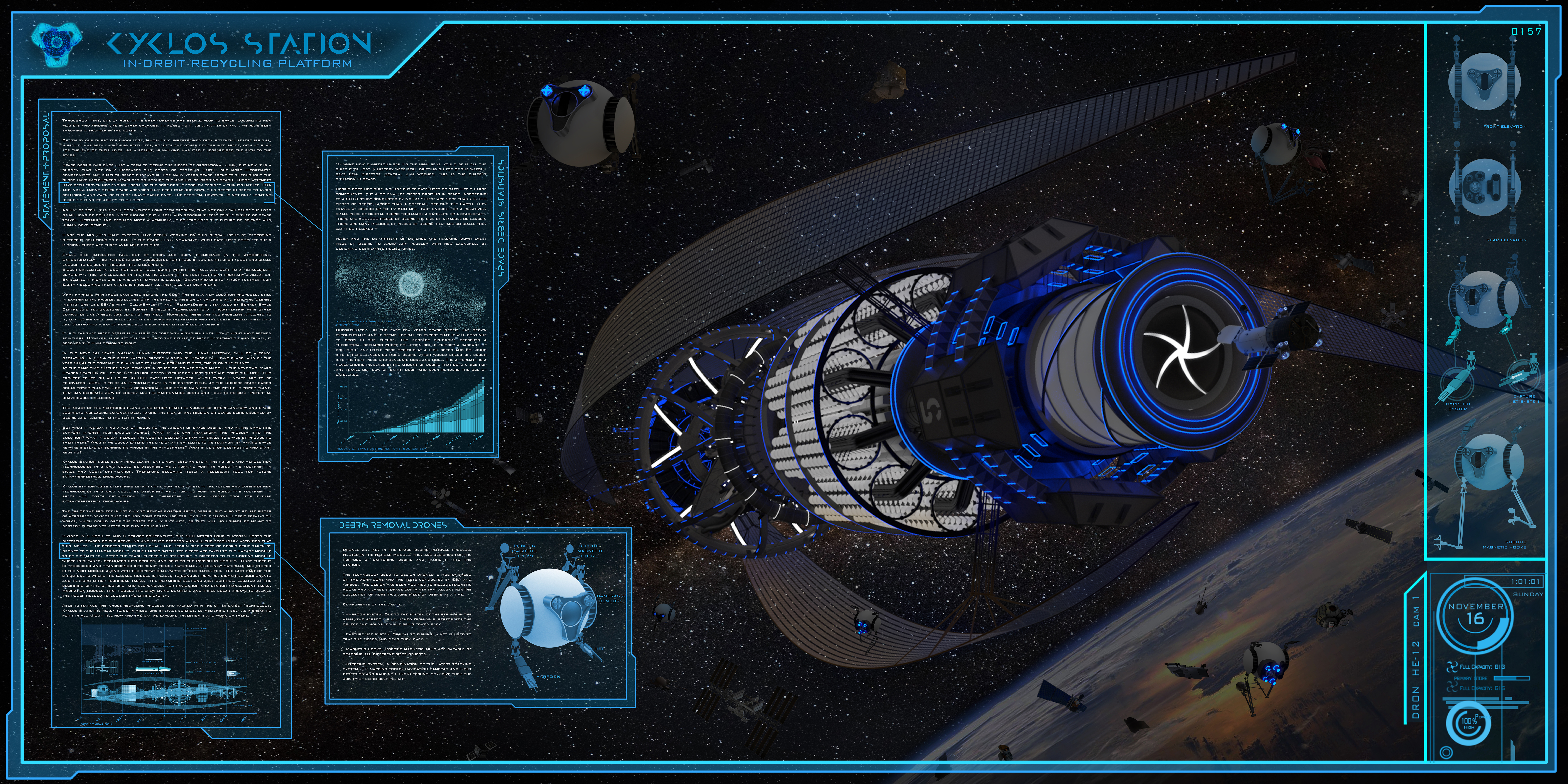
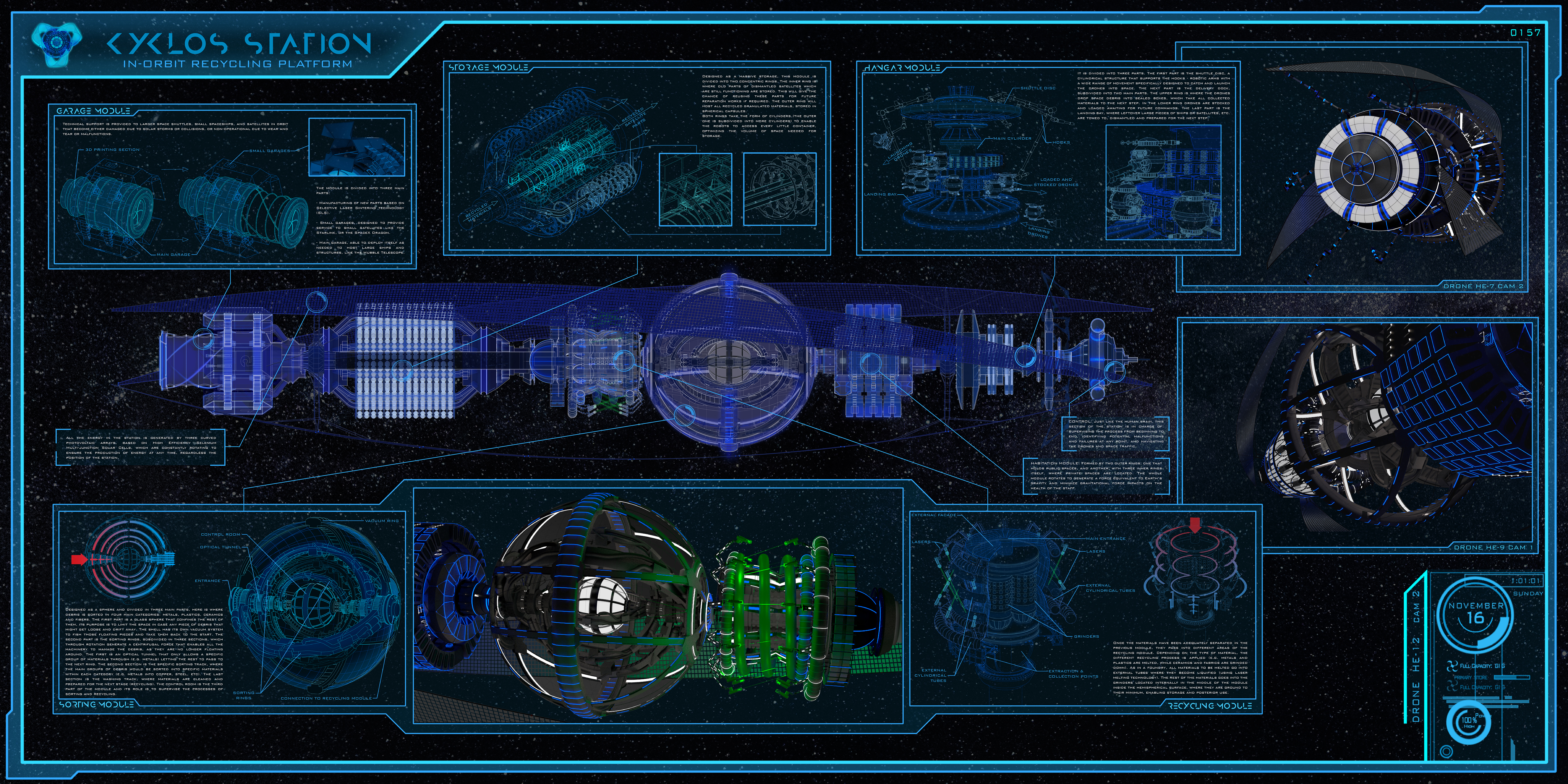
Kyklos Station takes everything learnt until now, sets an eye in the future and combines new technologies into what could be described as a turning point in humanity’s footprint in space and costs optimization. The aim of the project is not only removing the current amount of debris, but at the same time giving old useless pieces of aerospace devices a second chance. By doing so it allows in-orbit reparation works, which would drop the costs of any satellite, as they will no longer be meant to destroy themselves at the end of their life.
As a well-oiled machine, the 600 meters long building is, on one hand, capable to track down debris and process it into new resources. On the other hand, it is also able to give technical support to any spacecraft. Packed with the utter latest technology, Kyklos Station is ready to establish itself as the key to space exploration and interplanetary traffic, and thus a step forward into a greener and greater future of humanity’s development.
Designed by Irene Crespo Pérez and Carlos Sirviente Alonso for the 2021 eVolo Skyscrappers Competition.
 carlossirviente_architect